The history of the muselet plate (champagne cap)
From Adolphe Jacquesson's wire cage to a collector's item: the history of the muselet plate, the champagne cap.
What are the wire cage and plate for?
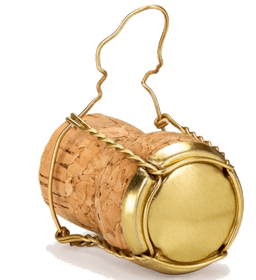
The wire cage (muselet) is the small twisted wire that caps the cork of sparkling wines. Its job: to contain the pressure of the carbon dioxide, several times that of a car tire, and keep the cork from escaping on its own. But a wire alone would mark and damage the cork. That's where the muselet plate comes in: a small metal piece, usually round, slipped between the wire and the cork to spread the pressure and protect the cork.
A 19th-century invention
The wire cage appeared in the 19th century, at a time when Champagne houses were looking to secure a product known for its sometimes-exploding corks. The invention is commonly credited to Adolphe Jacquesson, around 1844, although, as is often the case with craft innovations from that period, sources remain fragmentary and dates approximate. What is certain is that the system quickly became standard throughout the region.
From a simple technical part to a means of expression
For a long time, the plate remained anonymous and purely functional. Then, over time, producers realized it offered a visible space, just under the wire cage, where a name, a coat of arms or a design could be added. The plate then became a genuine miniature business card, printed or embossed, that each house customized in its own way.
This evolution gave rise, much later, to a full-fledged collecting practice: champagne cap collecting (placomusophilie). Enthusiasts, known as placomusophiles, began keeping, trading and sorting these small plates, turning a simple bottle-sealing accessory into an object of heritage and popular passion.
An incredible variety of designs
It's precisely this graphic diversity that makes collecting so appealing:
- Plates from major Champagne houses, with classic and elegant designs.
- Plates from small producers or growers, often rarer.
- Themed series (sport, regions, events, characters).
- Special or commemorative editions, highly sought after by collectors.
Even today, every new cuvee can hide a brand-new plate, keeping alive the curiosity and enthusiasm of a community always in search of the missing piece.