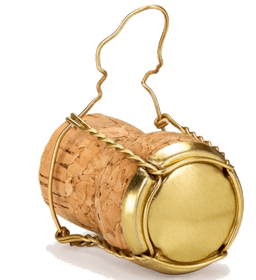
How to identify a champagne cap?
Producer name, series, vintage, inscribed words: learn to read a champagne cap and identify it using CapsCote's search.
Reading the information on a cap
Identifying a champagne cap takes a bit of method. A cap often carries several valuable pieces of information: the name of the producer or house, a designation (grand cru, brut, rose, special cuvee), sometimes a vintage, a drawing or coat of arms, and text inscribed around the rim. Each of these elements is a clue for tracking down the cap and its rating.
Reading the center of the cap
The center (the visible disc) generally shows the name of the producer or house, a logo, a coat of arms or a distinctive drawing. It's often the most legible and most useful element for starting a search.
Reading the rim
The rim of the cap (the circular edge) frequently carries additional text: an address, a regulatory mention, the name of the cuvee, or a grower's or handler's registration number. This text, even partial or hard to decipher, can be enough to tell apart two similar-looking caps.
Generic cap or producer cap
There are two main families:
- The generic cap: mass-produced, with no producer name, often featuring a standard decorative pattern (grapes, muselet, generic coat of arms). It's generally more common and therefore easier to identify by visual comparison.
- The producer cap: personalized, it carries the exact name of the grower, house or cooperative. It belongs to a specific series, which makes it easier to place once the producer is identified.
Why the inscribed words matter as much as the drawing
The visual alone isn't always enough: two caps can share a similar drawing but belong to different series or vintages. The inscribed words (even just a few legible letters) help clear up any doubt and find the right listing.
Using CapsCote search
CapsCote's search was designed for this identification work. You can search:
- by producer: by typing the name read on the cap, even partially;
- by series: if you already know the series or collection the cap belongs to;
- by variety: to compare the different known versions of the same cap;
- by keywords: based on the words visible on the center or rim of the cap.
You don't need to decipher everything: a few words or a fragment of a name are often enough to launch a search and bring up the matching caps, along with their description and rating.