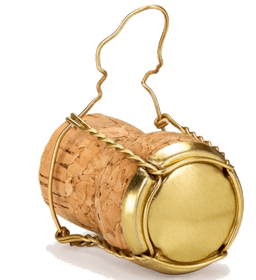
How to recognize an old champagne cap?
Shape, metal, typography, missing legal notices: the clues for recognizing an old champagne cap.
Visual clues of an old cap
Before looking for an exact date, learn to spot the signs that reveal a cap's age. These clues rarely all appear at once, but the more you find, the stronger the lead.
Shape and metal
Very old caps are often thicker, with heavier metal and a crown (the edge) that is sometimes irregular. The central dome may be less pronounced, or on the contrary very marked, depending on the stamping techniques of the time. A flat, thin and perfectly regular cap suggests a more recent production instead.
Typography and design
Old-style fonts, ornaments, coats of arms or gilded trim are good indicators. Old colors tend to be more matte, sometimes faded by oxidation, with less crisp flat areas than on a modern print.
Missing or dated mentions
This is often the most reliable criterion:
- No barcode or recent legal notices (batch number, recycling symbols, sorting logo).
- Producer address written in an old style: town name without a postal code, or with period spelling.
- Alcohol content mention written differently from current standards, sometimes missing or positioned differently.
- Missing grower-handler registration number, or one written in an outdated format.
The back of the cap
Always turn the cap over: the back often shows signs of wear, a patina, slight oxidation or grip marks typical of long-term storage. A completely smooth and shiny back, with no marks at all, suggests a more recent object, barring exceptional preservation.
Materials and wear
The varnish on an old cap ages differently: fine cracks, slight dulling, even a more noticeable metallic smell. Be careful though, a cap that has been well preserved for a long time can look almost new: wear alone isn't enough to date an object.
Old age doesn't mean high value
An old cap isn't automatically rare or sought after: some old productions were printed in very large numbers, while recent limited-edition series can be worth much more. Age is one clue among others, not a guarantee of value.
To confirm your identification and find out the real rating of a cap, compare it with the listings and series referenced on CapsCote, where producers, series and estimates are regularly updated by the community.