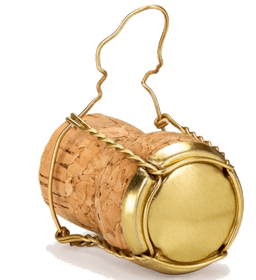
How to know the value of a champagne cap?
The value of a champagne cap depends on its rarity, condition, age and demand. Here's how to estimate it, with CapsCote's free rating.
The criteria that determine a cap's value
Estimating the value of a champagne cap (also called a crown cap or muselet plate) is far from arbitrary. Collectors and experts rely on several combined criteria to establish a reliable rating.
Rarity
This is often the most decisive factor. A cap produced in a very small quantity, made by an obscure house or associated with a limited cuvee, will naturally be worth more than a cap from a large, still widely available series.
Condition
A cap with no rust, no creases, intact colors and a well-centered dome will always be worth more than a damaged specimen. Collectors distinguish several condition levels: mint, very good condition, good condition, average condition or worn cap. This grading directly affects the price.
Age
Older caps, particularly those from before the 1960s-1970s, are generally more sought after. But be careful: age doesn't always mean rarity. Some recent caps from small productions can be worth more than mass-produced century-old caps.
The reference rating
As with coins or stamps, there is a reference rating for each cap, established from observed sales, exchanges between collectors and the expertise of the champagne cap collecting community. This rating serves as a common benchmark to place a cap relative to others.
Supply and demand
Finally, as in any collectibles market, the price shifts with current demand. A cap linked to a trending producer or sought after to complete a specific series can temporarily see its value rise, even if its objective rarity hasn't changed.
How to get a reliable estimate?
The simplest approach is to consult a specialized database. CapsCote offers a free rating with no registration required: simply search for the cap in question (by producer, series or keywords) to see its indicative estimate.
It's important to keep in mind that a rating remains an estimate, not a guaranteed sale price. It gives a useful order of magnitude for buying, selling or simply assessing your collection, but the final price of a transaction always depends on the meeting between a seller and a buyer, as well as the context at the time.
In summary
- Check the rarity and condition of the cap before any estimate.
- Take age into account, without treating it as an absolute criterion.
- Compare with the reference rating available on CapsCote.
- Keep in mind that supply and demand can cause real observed prices to vary.